
Amazon Bundle Prep Service for FBA Sellers
- primenest2026
- Mar 27
- 5 min read
Bundling looks simple until Amazon flags a shipment, separates a multipack, or checks in inventory late because labeling and packaging were not handled to spec. That is where an amazon bundle prep service becomes less of a convenience and more of an operational control point. If you sell bundles, kits, or multipacks through FBA, prep quality directly affects sellable inventory, check-in speed, and account safety.
Amazon treats bundled products differently from standard single-SKU units because the package has to function as one clear retail unit. That means the outer packaging, barcode setup, suffocation warnings when required, and bundle labeling all need to align before the shipment enters the fulfillment network. Small errors create expensive consequences - stranded inventory, relabeling fees, damaged goods, and delayed availability.
What an Amazon bundle prep service actually does
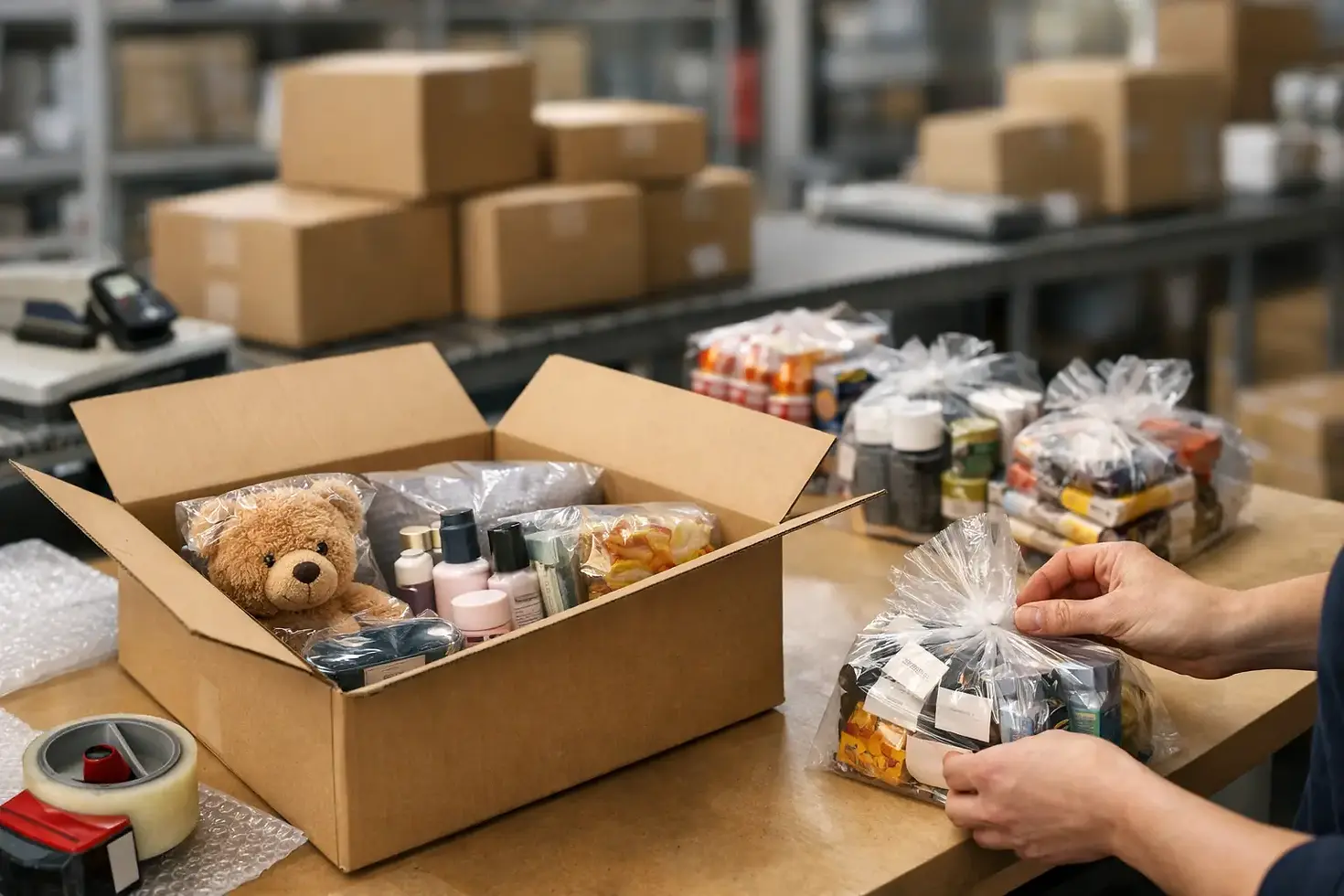
A proper amazon bundle prep service is not just putting two items in one bag and applying a sticker. It is a controlled workflow built around inspection, unit assembly, labeling, protection, and routing into Amazon under the correct shipment structure.
At the front end, inventory is received and checked against your packing list or purchase order. That intake step matters because bundle prep starts with count accuracy. If inbound quantities are off, the problem compounds once units are combined. A disciplined prep center verifies what arrived, identifies discrepancies early, and creates visibility before labor is applied.
From there, the products are assembled into the intended bundle configuration. Depending on the product type, that could involve shrink wrapping, poly bagging, carton-level organization, insert placement, or protective packaging to keep the set intact during transit and fulfillment handling. The goal is straightforward - Amazon must recognize the bundle as one sellable unit, and the end customer must receive it in the same condition you intended.
Labeling is the next control point. Many sellers run into issues here because a bundle often needs one scannable FNSKU for the final assembled unit, while any exposed manufacturer barcodes on inner products may need to be covered. If Amazon can scan the wrong code, inventory can be misidentified. That is not a minor issue. It can create check-in errors, listing confusion, or customer-facing order problems.
A competent prep partner also handles shipment readiness. That includes carton labeling, box content accuracy, and coordination for small parcel or palletized freight. Bundles that are prepped correctly but packed poorly for outbound transport still create losses. Execution has to hold all the way through dispatch.
Why bundle prep errors cost more than standard prep mistakes
Single-item prep errors are usually isolated to one SKU. Bundle errors tend to scale across every assembled unit in the shipment. If the wrong label is applied, if the bundle notice is missing, or if packaging fails under handling pressure, the entire shipment can be affected.
That is why bundles carry more operational risk than many new sellers expect. A standard product might survive a weak process for a while. A bundled product usually exposes process weakness quickly. Amazon’s compliance model is not designed to interpret your intent. It responds to what is physically in front of the receiver and what can be scanned, measured, and routed.
There is also a margin issue. Bundles often work because they improve average order value or help differentiate a listing in a crowded category. But the economics can turn fast if prep has to be reworked, if units arrive damaged, or if inventory misses a key sales window. A cheap prep workflow becomes expensive when it introduces avoidable friction.
When an Amazon bundle prep service makes the most sense
Not every seller needs outsourced bundle prep at the same stage. If you run very low volume, operate a narrow SKU range, and control your own warehouse with trained staff, internal prep can still be viable. The trade-off is management time, labor consistency, and process discipline.
Outsourcing becomes more attractive when volume grows, when inbound inventory comes from multiple suppliers, or when your team is spending too much time on repetitive assembly and labeling work. It also makes sense when you sell products that need precise packaging standards to stay compliant or arrive undamaged.
For wholesalers and multi-SKU operators, the biggest value is usually throughput and control. For private-label sellers, it is often listing protection and presentation quality. For smaller sellers, it is usually time - getting prep off the founder’s desk and into a system that can scale.
What to look for in an amazon bundle prep service
The right provider should operate like a specialist prep partner, not generic storage space with tape guns. That difference shows up in process detail.
First, look for intake discipline. You want inventory checked on arrival, discrepancies identified quickly, and clear communication before prep begins. Without that, you lose visibility at the point where corrections are easiest.
Second, evaluate labeling accuracy. Bundle prep depends on exact barcode handling. The provider should understand FNSKU application, barcode cover-up requirements, and how to prevent scan conflicts on assembled units. This is one of the main areas where Amazon sellers absorb unnecessary compliance risk.
Third, ask about packaging methods. Different bundles need different containment. Fragile items, soft goods, liquids, and multipiece kits should not all be treated the same way. A prep center with a clinical, step-by-step workflow will make packaging decisions based on product behavior in transit, not guesswork.
Fourth, speed matters, but only if it is controlled speed. Fast turnaround is valuable when it reduces stockout risk and shortens the time between supplier delivery and Amazon check-in. But speed without quality control creates rework. The better model is rapid dispatch supported by verification at each stage.
Finally, look for shipment coordination capability. Prep is only one segment of the workflow. If your provider can assemble, label, cartonize, and move shipments into Amazon with the correct outbound structure, you reduce handoffs and keep accountability tighter.
The operational advantage of outsourcing bundle prep
The main benefit of outsourcing is not convenience. It is consistency.
A specialized prep center creates repeatable outputs across every unit and every shipment. That matters when your catalog expands, supplier variation increases, or promotional bundles need to move on schedule. Instead of rebuilding the process each time inventory lands, you run through a documented system with defined checks.
There is also a direct account protection angle. Amazon sellers do not just need products shipped. They need products shipped in a way that avoids compliance exceptions and preventable receiving issues. If your prep process is inconsistent, your seller account ends up absorbing the consequences.
A structured partner also helps preserve internal focus. Founders and ecommerce teams should be spending time on sourcing, pricing, replenishment planning, listing optimization, and cash flow decisions. When those teams are stuck printing labels, building multipacks, and correcting box content issues, growth slows in ways that are hard to measure but easy to feel.
A practical standard for bundle prep execution
If you are evaluating your current process, use a simple standard. Every bundle should pass four tests before dispatch.
It should be count-accurate. The assembled unit must contain the exact components promised on the listing.
It should be scan-safe. Amazon must be able to scan the correct barcode without interference from exposed codes on internal items.
It should be transit-stable. The bundle has to remain intact through outbound shipping, Amazon receiving, and fulfillment handling.
It should be shipment-ready. Cartons, labels, and dispatch configuration should match Amazon’s receiving requirements from the start.
If your current workflow fails any of those tests with regularity, the issue is not just labor capacity. It is process control.
For sellers shipping into Amazon on a recurring basis, that is where a specialist partner creates measurable value. A provider such as Prep Horizon UK is built around that exact model - precision at intake, compliance in prep, and speed to dispatch, with the workflow discipline required to keep bundled inventory moving cleanly into FBA.
Bundles can be a strong growth lever when they are executed correctly. They can also become a steady source of friction when prep is treated as an afterthought. The difference usually comes down to whether your operation has a system strong enough to protect the product before Amazon ever touches it.

Comments